


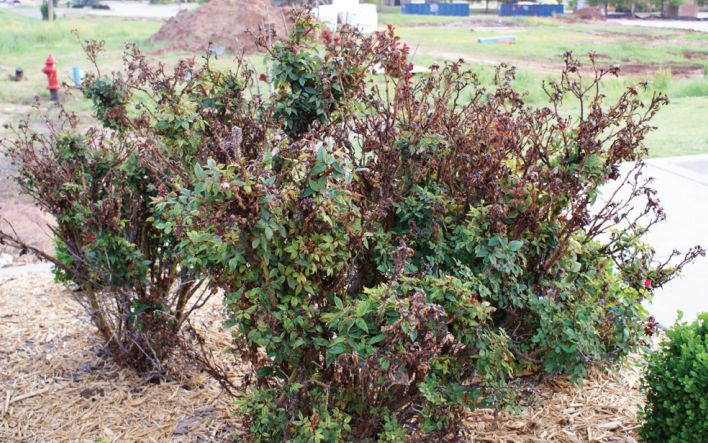
Similar Symptoms

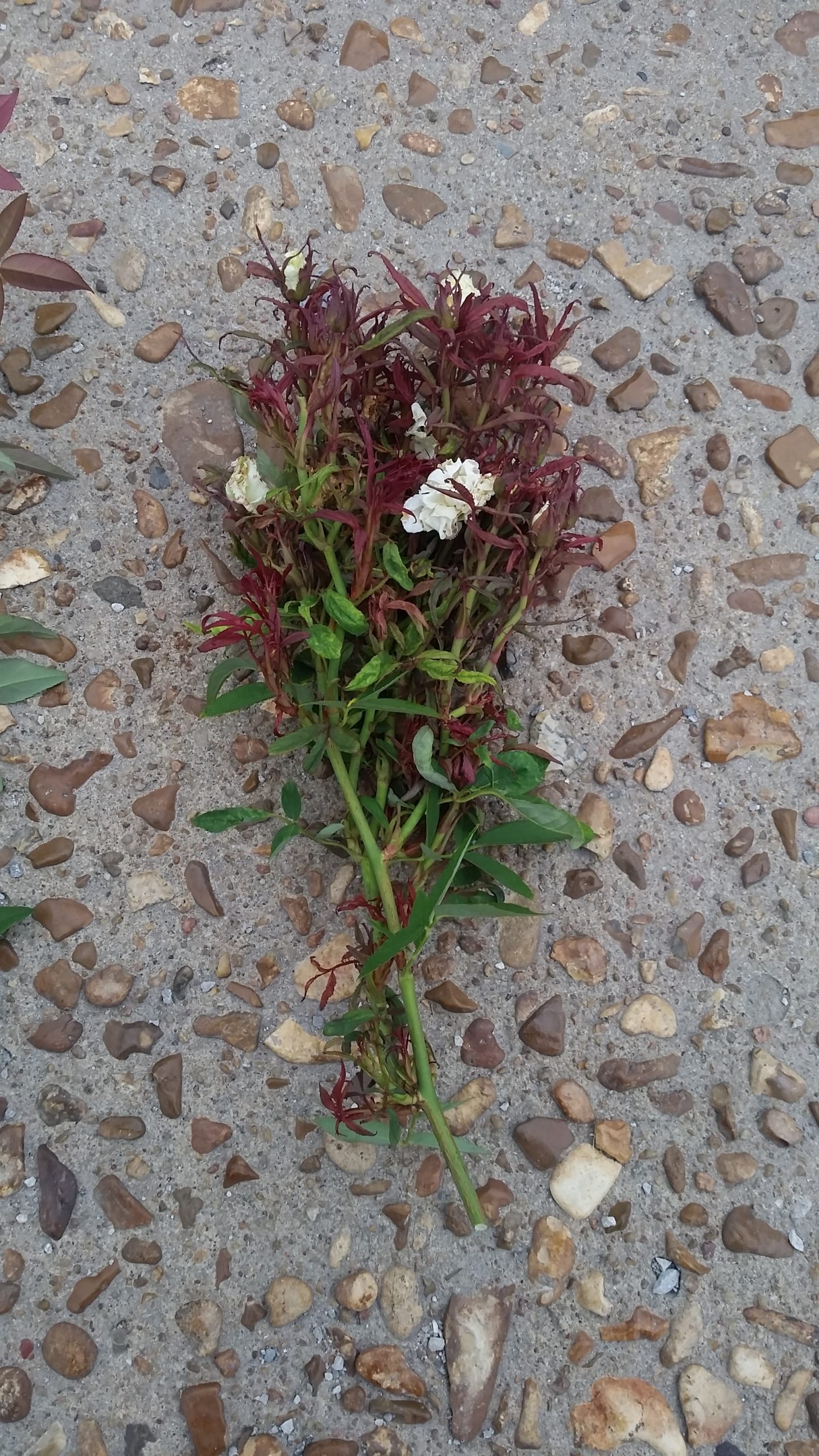
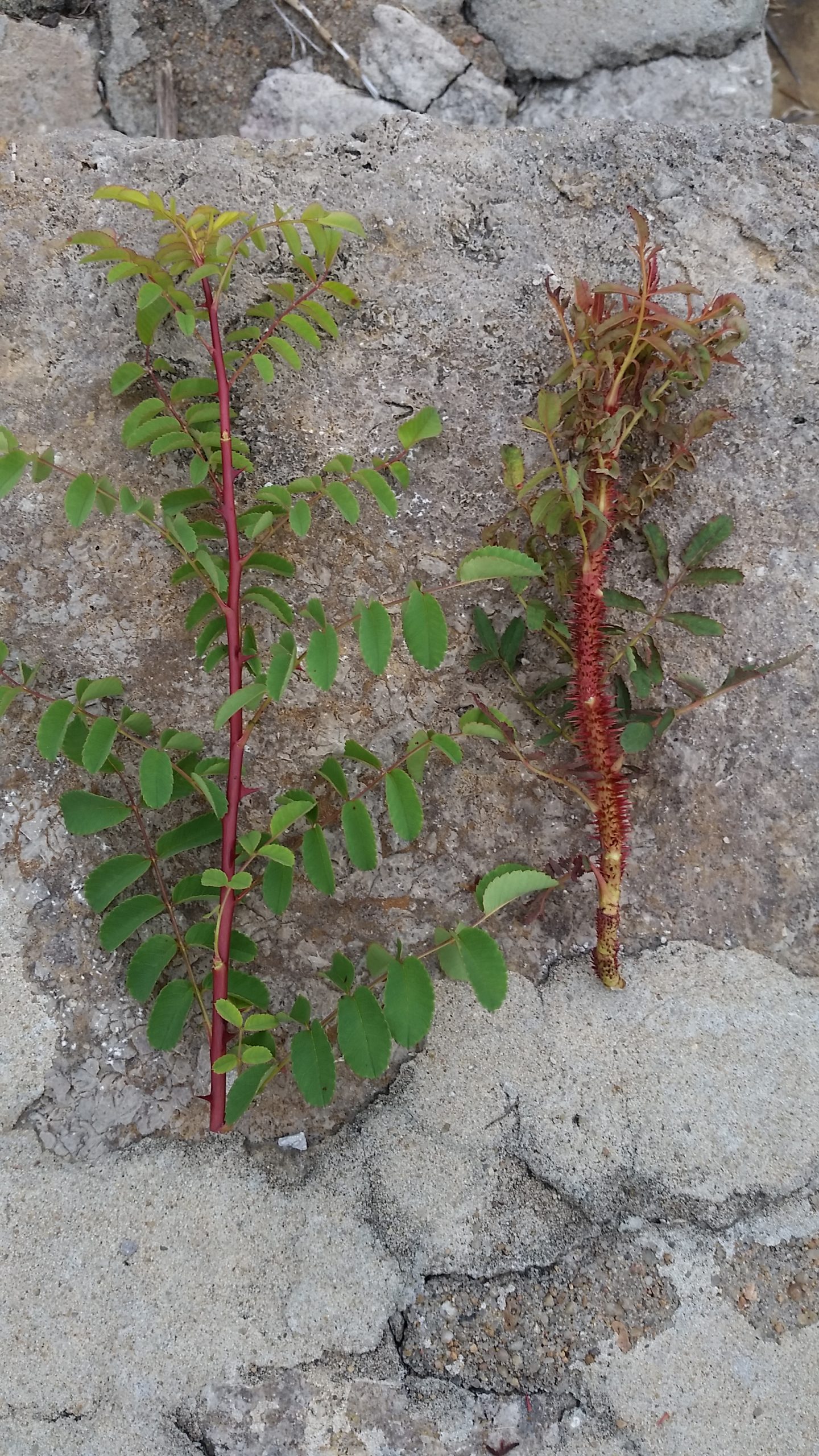
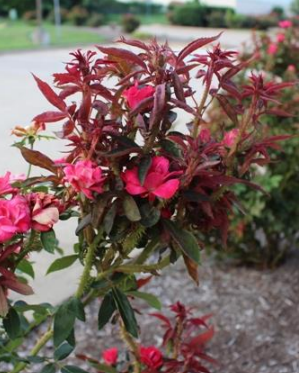
Many of the symptoms of RRD resemble herbicide drift damage, especially that of glyphosate, the active ingredient in Round-up®. The commonly-used broadleaf herbicide 2, 4-D can also cause leaf distortion on roses. The only symptoms that may not be present with such poisoning are excessive thorniness and red pigmentation. Such herbicide damage symptoms should disappear in the following year unless the plants are re-injured by drift. Nutrient deficiency may also resemble RRD symptoms, but will typically affect the entire plant. Regular, active scouting of rose plants is important for observation of combined symptoms over time.
Disease Vectors

RRD was once thought to be caused by aster yellows (Candidatus Phytoplasma asteris). Aster yellows symptoms mirror those of RRD. In 2011 the cause of RRD was identified as a negative-sense RNA virus and named Rose Rosette Virus (Emaravirus rosae). The disease is transmitted by the eriophyid mite (Phyllocoptes fructiphilus), a microscopic mite that is 3 to 4 times smaller than the average spider mite. After feeding on infected plants, Eriophyid mites are transported by attaching to other insects, clothing, gardening tools, and air currents to healthy plants where they feed again and introduce the virus. Once on a plant, the mite travels very little and relies on hiding in buds, leaf axils, and leaf scars to reproduce and survive. While Eriophyid mites are the main vector for RRD, it can also be transmitted via grafting, but is not sap-transmissible. The virus is not soil-borne, but if infected root pieces remain in the soil after infected plants are removed, they could potentially infect newly-transplanted healthy plants. Symptoms can appear 30 to 146 days after initial infection.